


 Understanding Hair Loss, Thinning and Shedding

Hair loss can describe several very different experiences: more hair in the shower, a widening part, a receding hairline, thinner temples, a smaller ponytail, reduced density at the crown, circular bald patches, breakage along the hair shaft or gradual loss caused by tight hairstyles. The correct response depends on the pattern and cause.
The American Academy of Dermatology explains that excessive shedding and true hair loss are not always the same. It is normal to shed some hair each day. A noticeable increase in shedding may occur several months after illness, fever, childbirth, surgery, major weight loss or intense stress. This is often described as telogen effluvium. Hereditary pattern hair loss behaves differently: follicles gradually become smaller, the growth phase shortens and density declines over time.
The central principle is simple: identify the likely cause while supporting the conditions required for healthy hair production.
Hair grows from living follicles
The visible hair shaft is made mainly of keratin, but the activity that produces hair takes place inside the follicle. Follicles depend on an adequate supply of energy, amino acids, vitamins and minerals. Hair production is not the body’s highest survival priority, so nutritional gaps, major physiological stress and illness can become visible through changes in shedding, strength, texture or density.
Nutrition is only one part of the picture. Genetics, hormones, autoimmune disease, thyroid disease, medication, scalp inflammation, hair practices and age may all matter. A multi-nutrient can support normal follicle nutrition, but it cannot determine the diagnosis and should not be presented as a cure for every form of alopecia.
Common patterns of hair concern
Diffuse shedding
Diffuse shedding means increased hair fall from across the scalp rather than one clearly defined bald area. Possible triggers include illness, fever, childbirth, surgery, rapid weight change, emotional stress, medication changes and nutritional deficiency. The trigger may occur two or three months before the shedding becomes noticeable.
Male pattern hair loss
Male pattern hair loss commonly appears as recession at the temples, a changing frontal hairline, thinning on the top of the scalp or reduced density at the crown. Genetics influence how sensitive follicles are to androgens, including dihydrotestosterone, commonly called DHT.
Female pattern hair loss
Female pattern hair loss often appears as a widening part, reduced density across the top of the scalp or a thinner ponytail. Temple recession can occur, particularly around menopause, but female hair loss is often more complex than male pattern loss. Hormonal change, thyroid function, iron status and other health factors may need assessment.
Traction and hair-shaft breakage
Tight braids, extensions, pulled-back styles, heat, chemical processing and rough handling can weaken hair or place repeated tension on follicles. Early traction damage may improve when the cause is removed. Long-standing traction can scar follicles and become permanent.
Patchy, inflamed or scarring hair loss
Smooth circular patches, scalp pain, burning, marked scaling, pustules, rapid recession or shiny scar-like areas require professional assessment. Alopecia areata is immune-related. Scarring alopecias can permanently destroy follicles if treatment is delayed. A hair multi-nutrient is not an alternative to medical care for these conditions.
Nutrients commonly associated with hair production
Protein supplies amino acids used to build keratin. Iron, zinc and biotin are frequently discussed in relation to hair because deficiency may be associated with hair changes. Vitamin C supports normal collagen production and helps with the absorption of non-haem iron. Vitamin D, B-group vitamins, copper, magnesium and essential fatty acids participate in wider processes that support normal tissue function.
More is not automatically better. Excess intake of certain nutrients can be harmful, and large amounts of vitamin A or selenium may themselves contribute to hair loss. The goal is appropriate nutritional support, not indiscriminate high dosing.
What is Trichotin Hair Regenesis?
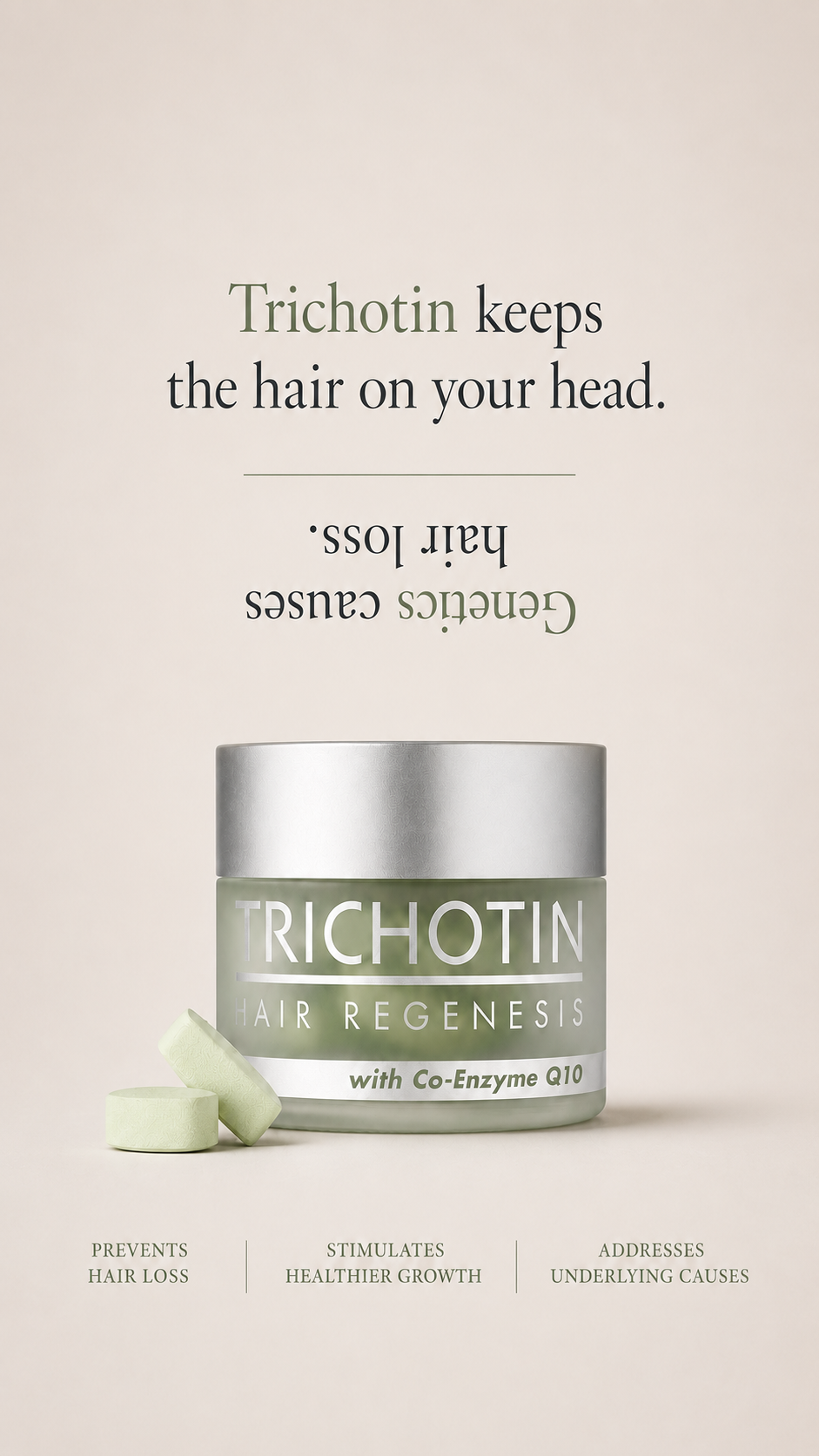
Trichotin Hair Regenesis is Fusion Labs’ broad daily hair multi-nutrient. It is designed for adults experiencing general thinning, increased shedding, reduced hair quality, weaker growth or nutritional gaps that may affect the hair.
Each pack contains 30 caplets. The formulation contains 34 nutrients across several functional groups:
Vitamins and B-group nutrients
Minerals including iron, zinc, copper, manganese, calcium and magnesium
Amino acids including L-cysteine and glycine
MSM and Co-Enzyme Q10
Omega-3
Botanical ingredients including nettle, saw palmetto and pumpkin seed extract
Ecklonia maxima granulated seaweed
The seaweed ingredient is 5 mg per caplet. This means 5 mg of the complete seaweed ingredient, not 5 mg of iodine. Because iodine content can vary naturally, someone with thyroid disease, iodine sensitivity or thyroid medication should confirm suitability with a doctor or pharmacist before use.
The usual label direction is one caplet daily, approximately 30 minutes before breakfast, unless a healthcare professional advises otherwise. Consistency matters because hair changes occur slowly. A three-month period is a more useful initial observation window than expecting a visible change in days.
Where Hair Regenesis fits best
Hair Regenesis is the broader starting option when the main concern is:
General thinning
Increased shedding
Reduced density
Weak or easily damaged hair
Hair changes after stress, illness or dietary disruption
Female hair thinning where elevated androgens have not been confirmed
A broad nutritional foundation for hair quality
Hair Regenesis is not a medicine and is not intended to diagnose, treat or cure alopecia areata, scarring alopecia, thyroid disease, iron-deficiency anaemia or another medical cause of hair loss.
What is Trichotin DHT Inhibitor?
Trichotin DHT Inhibitor is Fusion Labs’ targeted adult hair formula for androgen- and DHT-related pattern thinning. Each pack contains 30 red caplets.
The formulation includes:
Saw palmetto extract standardised to fatty acids
Beta-sitosterol
Nettle root extract
Co-Enzyme Q10
Panax ginseng
The label direction is one caplet in the evening, approximately 30 minutes before bedtime, unless a healthcare professional advises otherwise.
Where DHT Inhibitor fits best
DHT Inhibitor is generally the more targeted option for an adult man with:
A receding hairline
Temple recession
Thinning at the crown
Thinning across the top of the scalp
A family pattern of similar hair loss
It is not automatically the first choice for every woman with thinning. Women with suspected androgen-related hair loss should obtain professional guidance, particularly when using hormonal medication or managing a hormone-dependent condition.
The product should be avoided during pregnancy and breastfeeding. Anyone taking chronic prescription medicine, preparing for surgery, or managing a hormone-sensitive, diabetic or cardiac condition should follow the label warnings and consult a healthcare professional.
Hair Regenesis or DHT Inhibitor?
Choose Hair Regenesis as the broader nutritional starting point when: shedding is diffuse, hair quality has changed, the cause is uncertain, the concern follows stress or illness, or a woman has not been diagnosed with elevated androgen activity.
Consider DHT Inhibitor when: an adult man has a typical hereditary pattern involving the temples, hairline, top or crown.
Seek assessment before choosing either product when: hair loss is sudden, patchy, painful, inflamed, accompanied by scarring, associated with other health symptoms, or begins after a medication change.
Some adults use Hair Regenesis in the morning and DHT Inhibitor in the evening as complementary nutritional strategies. That does not make the combination appropriate for everyone. The complete ingredient lists, existing medication and health history should be reviewed first.
What results are realistic?
Hair grows slowly. The purpose of the first month is to establish consistent use and record a reliable baseline. Take clear photographs of the front hairline, both temples, the parting, the top and the crown in the same lighting and from the same angle.
Repeat photographs monthly. Useful observations include:
Amount of shedding during washing and brushing
Hair breakage
Texture and manageability
Appearance of the parting
Density around the temples and crown
Tolerance of the product
No responsible product page should promise a guaranteed growth rate or a specific result for every person. Outcomes depend on the cause of hair loss, the condition of the follicles, consistency, age, genetics, health, medication and hair-care practices.
When should hair loss be assessed?
Professional assessment is especially important when:
Hair loss is rapid or severe
Bald patches appear
The scalp is painful, inflamed, intensely itchy, crusted or scarred
Eyebrows or eyelashes are also being lost
A child develops hair loss
There are symptoms of thyroid disease, anaemia or hormonal imbalance
Hair loss begins after a new medicine
A woman develops hair loss with new facial hair, acne or menstrual changes
Hair loss continues despite correcting obvious stressors
Frequently asked questions
Does Trichotin work for every hair type and texture?
The nutritional processes involved in follicle activity apply across hair types and textures. The likely cause of thinning still matters. Textured hair can also experience breakage or traction, which requires appropriate hair-care changes in addition to internal nutritional support.
Can Trichotin replace a dermatologist?
No. Trichotin Hair Regenesis and Trichotin DHT Inhibitor are multi-nutrients. A dermatologist diagnoses the type of hair loss and can prescribe treatment where necessary.
Is Hair Regenesis the green product?
Yes. Hair Regenesis is the broader green-box formula. DHT Inhibitor is the targeted red-caplet formula.
Can Hair Regenesis be used with thyroid medication?
Hair Regenesis contains minerals that may reduce absorption of some thyroid medicines when taken too closely together, and it contains 5 mg of Ecklonia maxima seaweed as a natural iodine source. A doctor or pharmacist should approve use. When approved, they may advise separating the products by several hours.
Is DHT Inhibitor only for men?
It is primarily positioned for adult androgen- and DHT-related pattern thinning, which is common in men. It should not be casually recommended to women without considering hormonal history, medication, pregnancy status and professional guidance.
Where can Trichotin be purchased?
Trichotin is available through accredited Fusion Labs stockists and the Fusion Labs online store. Stock changes quickly, so clients should call a stockist before travelling.
Not sure which Trichotin formula fits your concern? Contact Fusion Labs with your age, the areas affected, how long the change has been present, relevant health information and clear photographs of the hairline, temples, parting, top and crown. Guidance does not replace a diagnosis, but it can help you choose the most appropriate next step.