


 Brittle, Peeling and Slow-Growing Nails

Nails may be small, but changes in their strength, colour, surface or growth can reveal a great deal about daily habits and health. Splitting, peeling and breakage are common. They may result from repeated wetting and drying, cleaning chemicals, acetone, aggressive manicures, artificial nails, trauma or simple age-related change.
Some nail changes require more attention. Fungal infection, psoriasis, iron deficiency, thyroid disease and other health conditions can also affect the nails. A nail multi-nutrient supports normal growth and structure, but it cannot identify or treat these underlying causes.
How nails grow
The visible nail plate is formed mainly from keratin. New nail is produced by the nail matrix beneath the skin at the base of the nail. Fingernails grow slowly, and toenails grow even more slowly. This means the condition of a new nail reflects influences over several months.
A product used for a few days cannot reasonably transform the complete nail plate. Progress should be judged by the quality of new growth emerging from the base.
Common reasons nails become weak
Repeated water and chemical exposure
Frequent handwashing, cleaning, sanitiser, detergents and repeated cycles of wetting and drying can make nails more brittle. Gloves and moisturising the hands and cuticles can help reduce environmental damage.
Nail treatments and trauma
Gel removal, acrylics, aggressive buffing, filing the nail surface and using tools beneath the nail can weaken or lift the nail plate. A temporary break from intensive treatments may be necessary.
Nutritional deficiency
Iron deficiency and inadequate intake of certain nutrients can affect nail quality. Thin, spoon-shaped nails may be associated with iron deficiency and require assessment rather than self-treatment.
Thyroid and systemic health
Thyroid disease may be associated with dry, brittle, peeling, crumbling or slow-growing nails. Treating the underlying condition is more important than relying on a beauty product alone.
Nail psoriasis
Pitting, lifting, discoloration, crumbling and buildup beneath the nail can occur with nail psoriasis. It may appear even when skin psoriasis is not obvious.
Fungal infection
Nail fungus may cause thickening, yellow or brown discoloration, crumbling, lifting or debris beneath the nail. Several different nail conditions can look like fungus, so correct diagnosis matters. A nutritional product is not an antifungal treatment.
What is eVerest Nail Health?
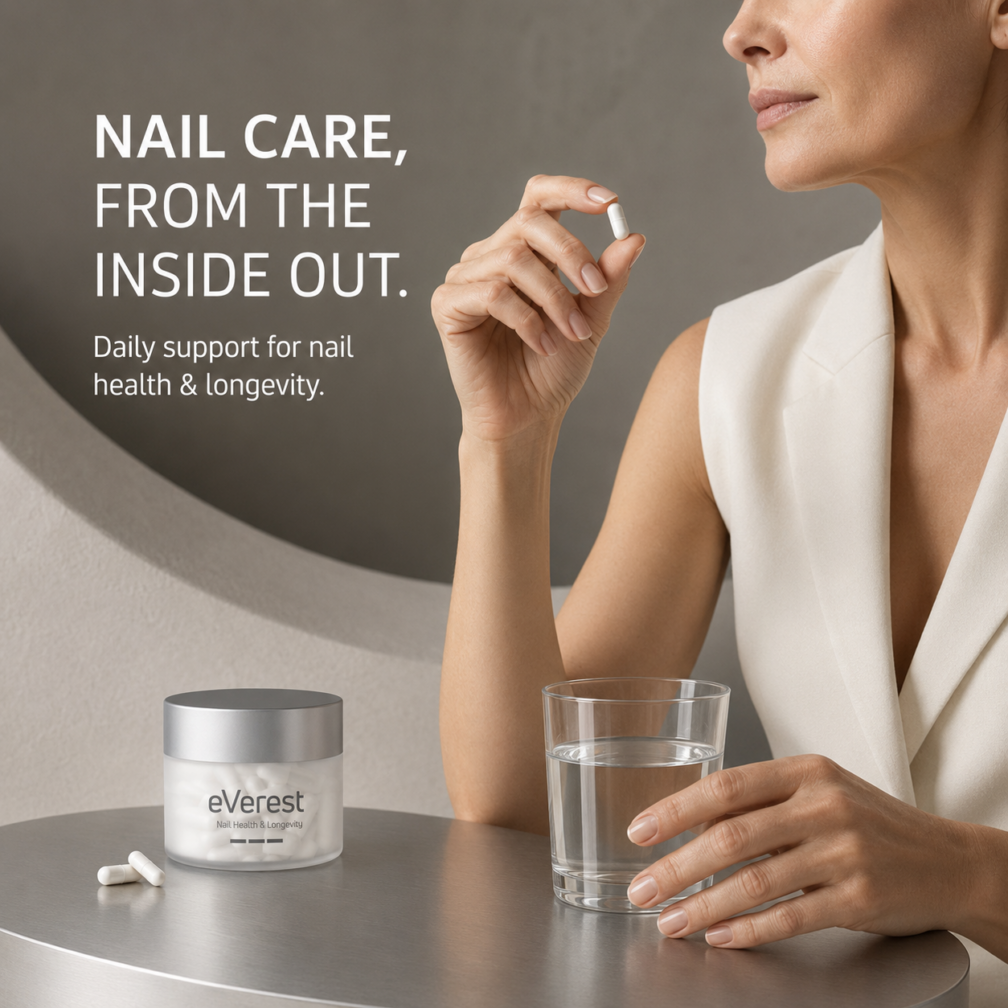
eVerest Nail Health is Fusion Labs’ once-daily nail multi-nutrient for adults seeking stronger, healthier-looking and more resilient nails.
Key ingredients include:
Biotin
Silica
L-cysteine
Probiotics
These ingredients are included to support the nutritional environment associated with nail formation and keratin structure.
Where eVerest fits best
eVerest is best positioned for:
Brittle nails
Nails that split or peel
Nails that break easily
Slow-looking nail growth
Reduced nail resilience
Recovery from repeated cosmetic nail treatments
Persons seeking broad internal nail support
A practical nail-strength plan
Protect
Wear gloves for cleaning and prolonged water exposure.
Avoid using fingernails as tools.
Reduce repeated gel, acrylic and acetone cycles when nails are damaged.
Do not cut or aggressively push back the cuticles.
Moisturise
Apply hand cream and cuticle oil regularly, especially after washing.
Nourish
Eat a varied diet with adequate protein, iron, zinc and other essential nutrients. Use eVerest according to the label if it is suitable for you.
Observe
Photograph the nails before beginning. Repeat monthly in the same light. Look at the new growth from the base rather than only the free edge.
Assess
If nails are discoloured, painful, lifting, thickening, pitted or changing shape, consult a doctor or dermatologist.
Realistic expectations
Nails grow slowly. Allow 2-3 months to observe the quality of new nail growth. Toenails may take considerably longer than fingernails.
Useful changes to track include:
Less splitting at the free edge
Reduced peeling
Improved flexibility
Fewer breaks
Smoother new growth
Improved tolerance of everyday activity
Frequently asked questions
Is eVerest only for women?
No. Nail structure and growth matter across genders. eVerest is an adult nail-health multi-nutrient.
Why do nails need several months?
The visible nail plate grows gradually from the nail matrix. Existing damage must grow out before the full new nail can be assessed.
Can eVerest be used after gels or acrylics?
It may be used as part of a recovery routine, together with reducing trauma, protecting the nails and moisturising the cuticles. Severe lifting, pain, green or dark discoloration, or suspected infection requires assessment.
Can biotin affect blood tests?
Yes. Biotin may interfere with some laboratory tests. Tell your doctor and laboratory that you are taking a biotin-containing multi-nutrient.
Can eVerest replace a varied diet?
No. It is intended to complement appropriate nutrition and nail care.
If your nails are brittle, peeling or easily broken, eVerest should indeed become part of a consistent nail-care routine.