


 Better Sleep and a Calmer Evening

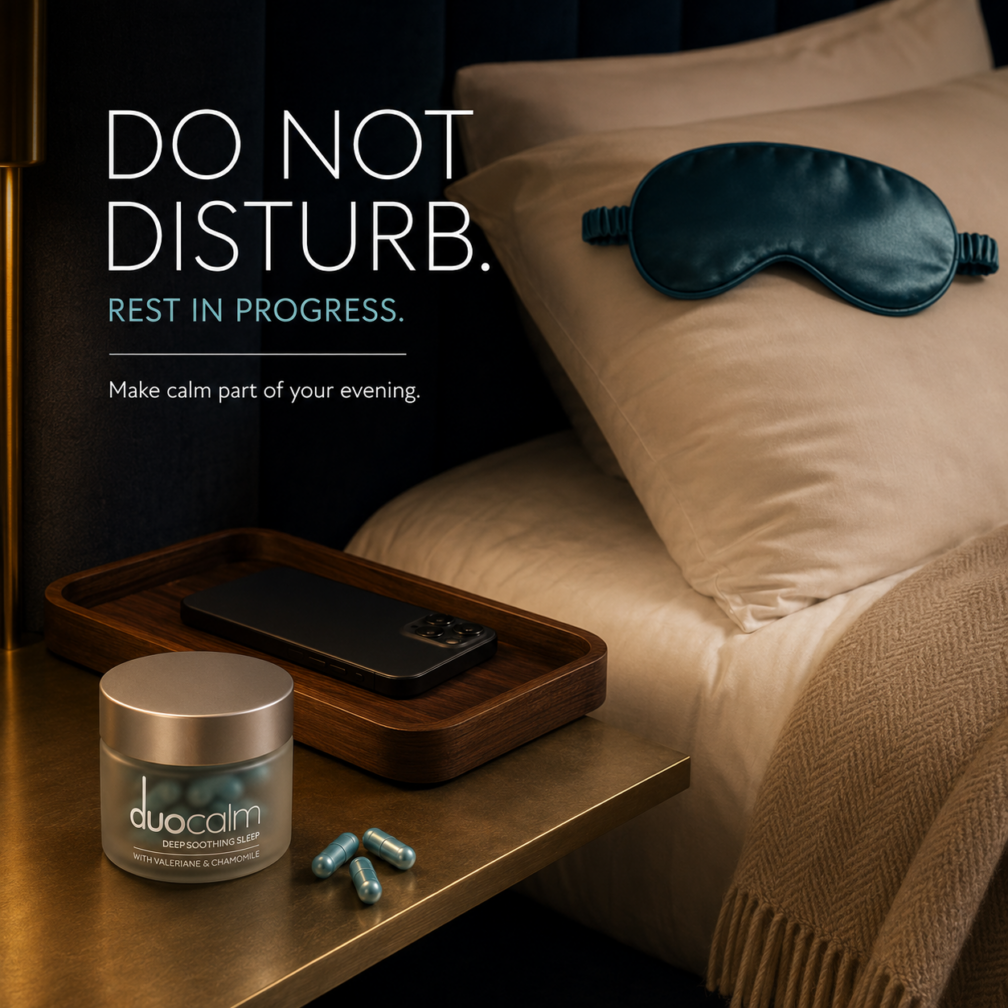
Sleep is an active biological process that supports memory, concentration, emotional regulation, tissue repair, metabolic health and immune function. A difficult night may follow stress, travel, caffeine, screen exposure, pain, an irregular routine or an unsuitable sleep environment. Persistent sleep difficulty may involve insomnia, sleep apnoea, restless legs, medication, depression, anxiety, menopause or another health condition.
The most reliable foundation is not a single ingredient. It is a consistent sleep routine supported by an appropriate environment and, where needed, professional care.
What does good sleep support?
Quality sleep helps the brain form and maintain pathways involved in learning and memory. It supports attention, decision-making and emotional regulation. The body also uses sleep for repair and wider physiological regulation.
Ongoing sleep deficiency can affect daytime performance, reaction time, mood and safety. It is also associated with wider health risks. Persistent symptoms deserve attention rather than being normalised.
The difference between a difficult night and chronic insomnia
Occasional sleep difficulty may occur around stress, travel or schedule changes. Chronic insomnia is more persistent and affects the ability to fall asleep, remain asleep or obtain good-quality sleep despite having adequate opportunity.
The foundations of a supportive evening routine
Keep timing consistent
Go to bed and wake at approximately the same time each day. A stable schedule helps reinforce the body’s sleep-wake rhythm.
Protect the final hour
Use the final hour before bed as a transition. Dim bright light, reduce demanding work and choose quieter activities.
Manage stimulants
Caffeine may remain active for hours. People who are sensitive to it may benefit from avoiding coffee, energy drinks and other caffeine later in the day.
Create a sleep-supportive room
A cool, dark and quiet bedroom supports rest. The mattress, pillows and bedding should be comfortable.
Avoid using alcohol as a sleep strategy
Alcohol may initially make a person feel sleepy while disrupting sleep quality later in the night.
Address persistent stress
Breathing exercises, prayer, journalling, gentle stretching, reading and a consistent evening ritual can help the mind transition away from daytime demands.
What is Duo Calm?
Duo Calm is Fusion Labs’ evening relaxation and sleep-support multi-nutrient.
Each daily serving contains:
Valerian: 300 mg
Chamomile: 50 mg
Magnesium glycinate: 125 mg
Vitamin B6: 1.7 mg
The formula is designed to support a calm, relaxed state and a more settled evening routine.
Ingredient context
Valerian
Valerian has a long history of use for relaxation and sleep.
Chamomile
Chamomile is traditionally used as a calming herb. People with allergies to ragweed or related plants may react to chamomile.
Magnesium glycinate
Magnesium participates in normal nerve and muscle function. Magnesium glycinate is commonly chosen for evening formulas.
Vitamin B6
Vitamin B6 participates in normal metabolism and nervous-system processes. Duo Calm includes a measured daily amount as part of the combined formula.
Duo Calm therefore supports relaxation and restful sleep.
How to use Duo Calm responsibly
Follow the current product label. Use the product as part of a regular wind-down routine rather than as permission to maintain habits that disrupt sleep.
Before using Duo Calm, consult a doctor or pharmacist if you:
Use sedatives, sleep medication or medicine that causes drowsiness
Take chronic prescription medicine
Are pregnant, planning pregnancy or breastfeeding
Have liver or kidney disease
Have a diagnosed sleep disorder
Are preparing for surgery
Have a known allergy to chamomile, ragweed or related plants
Avoid combining a calming product with alcohol. Do not drive or operate machinery if drowsy.
A simple Duo Calm evening framework
Two hours before bed
Finish heavy meals where possible.
Reduce stimulating work.
Prepare the room.
One hour before bed
Dim lights.
Reduce screens or use them more intentionally.
Choose a calming activity.
At the label-directed time
Take Duo Calm as directed.
Use the same timing consistently.
Avoid adding other sedating products without professional advice.
At bedtime
Keep the room cool, dark and quiet.
Use a brief breathing, prayer or relaxation practice.
Avoid checking the time repeatedly.
When to seek professional help
Speak to a healthcare professional if:
Sleep difficulty occurs repeatedly and affects daytime life
Loud snoring or breathing pauses occur
There is severe daytime sleepiness
Sleepiness affects driving or workplace safety
Restless or uncomfortable legs repeatedly prevent sleep
Mood symptoms are severe
Sleep changes began after medication
A child or pregnant person has persistent sleep difficulty
Frequently asked questions
Is Duo Calm a sleeping tablet?
Duo Calm is an evening multi-nutrient containing valerian, chamomile, magnesium glycinate and vitamin B6. It is not a prescription sleeping medicine.
Does Duo Calm treat insomnia?
Duo Calm is designed to support relaxation and restful sleep. Chronic insomnia is a medical sleep disorder and may require structured behavioural treatment, medical investigation or prescribed care.
Can Duo Calm be taken with sleeping medicine?
Do not combine it with sedating medicine without approval from a doctor or pharmacist.
Can Duo Calm be taken every night?
Follow the current label and consult a healthcare professional if sleep difficulty is persistent, if chronic medicine is used or if long-term use is being considered.
Is a sleep routine still necessary?
Yes. Consistent timing, a suitable environment, reduced evening stimulation and appropriate health care remain the foundation.
Duo Calm is designed for adults seeking a more settled evening and nutritional support for relaxation. Build it into a consistent wind-down routine and seek professional help when sleep difficulty is persistent or accompanied by signs of a sleep disorder.